MOSAIC Learning Pathway

Know better

  • 1.5–3 hour conversation
  • Ages 14 and over
  • 7 MOSAIC cards
  • Free printable PDF

Thank you for being here!

Welcome to a community of people who are motivated to create cohesion through courageous conversations. We hope that these MOSAIC Pathways will support you to have healthy conversations about complex topics, so that we can collectively move closer to a more peaceful and inclusive society.

We know how busy life can get and that it can be difficult to find the time to be fully prepared for these conversations. Our team has designed this pathway as one possible way to structure a conversation around this topic. We welcome your feedback and suggested changes for this pathway, and any ideas you have for other pathway topics.

Introduction

The aim of this pathway is to explore how we move forward once we become aware of an inequity or injustice which marginalises an individual or group. This pathway encourages participants to identify where they can become ‘active’ within one’s own life and communities (i.e., work, school, family, neighborhood). Participants will discuss how they can start to use their awareness, privilege, and strengths through actionable steps to uplift the voices of the marginalised, challenge oppressive systems and advocate for the liberation of all oppressed peoples. This MOSAIC Pathway provides a useful follow-up conversation to the Pathway on Allyship. This conversation is recommended for participants aged 14 and above.

“Action without thought is empty, thought without action is blind.”

~ Kwame Nkrumah (1st President of Ghana, 1902-1972)

Setting up the Conversation

Before getting stuck into the conversation, think how you might create a space that encourages open dialogue, vulnerability with purpose, and constructive engagement, where everyone involved feels empowered to share their experience without fear of judgment.

We encourage appropriate ice breaker and safety check out activities. We believe alongside those activities that this pathway can range in time from 1.5 hours to 3 hours.

Creating a Safe and Accountable Space

  1. Acknowledge Diverse Experiences: Begin by acknowledging the diverse experiences present in the room. Everyone brings unique perspectives shaped by their backgrounds, identities, and lived experiences. This recognition lays the foundation for understanding and empathy.
  2. Variation in Knowledge Levels: Recognise the varying levels of knowledge about the topic. Some participants may be well-informed, while others may be exploring these concepts for the first time. Encourage an open mind and an attitude of curiosity for learning from one another.
  3. Sharing Personal Stories: Emphasise the importance of sharing personal stories, which can humanise the discussion and deepen understanding. Participants should feel empowered to share their experiences, knowing that doing so enriches the conversation.
  4. Ground Rules for Support: Establish ground rules for supporting each other throughout the conversation. Encourage active listening, empathy, and validation. Create a space where participants can express their thoughts and feelings without fear of judgement.
  5. Checking Comfort Levels: Set guidelines for checking in on comfort levels. Acknowledge that discussions around these topics can evoke strong emotions. Encourage participants to communicate when they need a pause or additional support.
    1. Check-in with Young Indigenous & People of Colour: Recognise that these topics/conversations may be more personal for young people of colour. Consider checking in with them individually before the session to gauge their comfort levels and address any concerns. During the conversation, be attentive to their reactions and provide opportunities for them to share or opt-out as needed.
    2. Addressing Power Dynamics: Be mindful of power dynamics within the group. Ensure that everyone has an opportunity to speak, and actively intervene if dominant voices overpower marginalised perspectives. Facilitate with an understanding of the intersectionality of identities and how they contribute to varied experiences of discrimination.
  6. Respecting Dissenting Views: Acknowledge the potential for differing opinions and viewpoints. Create an environment where dissenting views are acknowledged and discussed constructively through respectful dialogue. However, dissenting views do not mean participants are entitled to express views that are violent, discriminatory, or question the existence of other people. Respect for differing views does not include tolerating hateful and harmful speech. Ensure that conversations remain within the bounds of respectful communication, within an atmosphere where participants feel safe and valued. Encourage discussions that promote understanding rather than perpetuating harm and address any language or behaviour that may be harmful or disrespectful to others.

Support and Care for Young People

  1. Recognise Vulnerability: Understand that young people, especially those from marginalised communities, may feel vulnerable discussing these topics. Create an atmosphere that respects and values their emotions and perspectives.
  2. Provide Resources for Support: Offer resources and information for additional support. Encourage participants to seek help if needed, offer a post workshop support sheet.
  3. Empower Through Education: Empower young people through education. Provide resources that help build resilience and self-esteem. Highlight positive stories and examples of resilience within their communities.
  4. Anti-Racist Practice: Incorporate anti-racist principles into facilitation by emphasising the importance of dismantling racist structures and promoting inclusivity. Encourage young people to explore how they can actively contribute to anti-racist practices in their lives and build a sense of collective responsibility in creating a more equitable and just society.
  5. Encourage Allyship: Encourage participants to support one another, learn from shared experiences, and work together towards a more inclusive and equitable future.
MOSAIC Cards

These are the recommended MOSAIC cards you can use to explore the theme Know Better, Do Better.

INTEGRATING COHESION (WHERE TO FROM HERE)

27

What might an ideal Aotearoa/New Zealand look like for everyone?

  • What things would you want us to keep or hold as a nation?
  • If you could change one thing about Aotearoa/NZ what would it be?
  • Who could you talk to if you were to do something about this?
  • Who else might need to be part of the change?

INTEGRATING COHESION (WHERE TO FROM HERE)

26

How would you describe the collective society of Aotearoa/New Zealand?

  • What are you proud of?
  • What are you not proud of?
  • How can we all collectively behave in a way that is better than we are now?
  • What can you do personally to contribute to a better Aotearoa/NZ?

INTEGRATING COHESION (WHERE TO FROM HERE)

25

What is 'social cohesion'?

  • Can you think of examples where you have seen connectedness and solidarity amongst groups?
  • What would you like to know about it?
  • What could be useful to learn in school/courses that might create social cohesion?

INTEGRATING COHESION (WHERE TO FROM HERE)

30

What kind of person do you want to be?

  • What are the good things about you that you can celebrate?
  • What are the things you want to grow/develop?
  • What changes do you need to make personally?

If there was one thing you would want to be known as/for what would it be?

INTEGRATING COHESION (WHERE TO FROM HERE)

28

If you could change one thing in your community what would it be?

  • Who could you talk to if you were to do something about this?
  • Who else might need to be part of the change?

INTEGRATING COHESION (WHERE TO FROM HERE)

29

If you could change one thing in your home, school or work what would it be?

  • Who could you talk to if you were to do something about this?
  • Who else might need to be part of your team?

Sometimes change happens close to home…

MAPPING OPINIONS (STARTER QUESTIONS)

6

Who or what influences your worldview?

  • As you reflect, how do you feel about who or what is shaping your worldview?
  • Is there anyone or anything you want to remove?
  • Who or what would you want to add?

Supporting Resources

Here is a selection of relevant resources for facilitators and workshop participants to explore the topic of Know better. We recommend that you engage with the resources beforehand; however, they may also be built into the structure of the session where appropriate.

  • Chescaleigh holding up a sign reading 5 Tips For Being An Ally

    Youtube Video

    5 TIPS FOR BEING AN ALLY

    Youtube video by content creator @chescaleigh summarizing 5 Tips For Being An Ally to others.

    G, 4 minutes · Basic

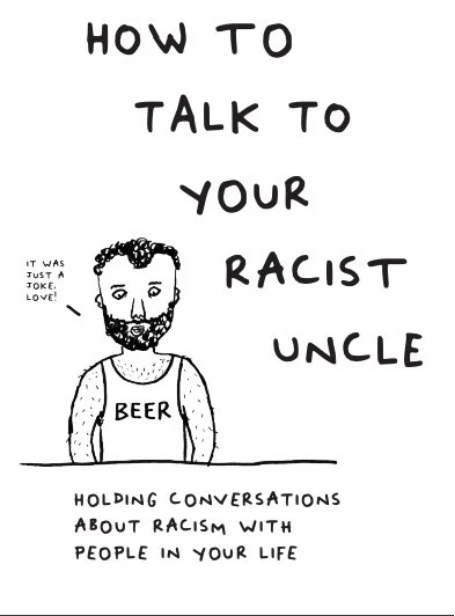
  • Hand-drawn zine cover: a bearded man in a BEER singlet saying “it was just a joke, love!”

    Zine PDF

    HOW TO TALK TO YOUR RACIST UNCLE

    A resource guide providing practical advice and guidance for having constructive conversations with family members who hold racist views.

    G, 9 pages · Basic/Moderate

  • Title card reading Beyond White Guilt, Connecting to Aotearoa

    TV Series

    BEYOND WHITE GUILT (2019)

    A short series that explores the complexities of racial dynamics, colonisation and cultural identity in Aotearoa New Zealand.

    G, 7 episodes, 5 minutes – 7 minutes each · Basic

  • Cover of The Common Cause Handbook

    Handbook/PDF

    THE COMMON CAUSE HANDBOOK - POVERTY AND INEQUALITY RESEARCH CENTRE

    A guide for fostering collaboration and collective action toward addressing poverty and inequality through shared values and principles.

    G, 43 pages · Moderate

  • Illustration (Appendix I of this Pathway)

    EVERYDAY FEMINISM COMIC

    This illustration shows how the combined impacts of the intersections of systemic oppression affect those who are marginalised.

    Basic

The Conversation

A

Getting started

INTEGRATING COHESION (WHERE TO FROM HERE)

27

What might an ideal Aotearoa/New Zealand look like for everyone?

  • What things would you want us to keep or hold as a nation?
  • If you could change one thing about Aotearoa/NZ what would it be?
  • Who could you talk to if you were to do something about this?
  • Who else might need to be part of the change?

This question encourages participants to start the session reflecting on what they consider to be an ideal society. Participants may identify what factors from their lives contribute to their answer (i.e., what is a priority, what is not – and for what reason).

B

Getting deeper

INTEGRATING COHESION (WHERE TO FROM HERE)

25

What is 'social cohesion'?

  • Can you think of examples where you have seen connectedness and solidarity amongst groups?
  • What would you like to know about it?
  • What could be useful to learn in school/courses that might create social cohesion?

This question prompts discussion of how we, as different individuals or groups within a society, can interact and contribute to the overall wellbeing of a community. The concept of ‘social cohesion’ can be explored in more depth via the Pathway on Social Cohesion.

Follow up questions

What level of unity, connectedness and harmony in your community?

MAPPING OPINIONS (STARTER QUESTIONS)

6

Who or what influences your worldview?

  • As you reflect, how do you feel about who or what is shaping your worldview?
  • Is there anyone or anything you want to remove?
  • Who or what would you want to add?

This card asks participants to identify the range of influences that impact how they understand the world and their resulting actions or inaction. Encourage participants to think broadly across all influences, including individuals, environments and media. Understanding these influences helps participants be clear about what they stand for as they make choices and changes to help dismantle oppressive systems and improve their allyship with others.

Follow up questions

What ways have you recognised the impact these influences have had on shaping your worldview?

What values do you share with these influences?

INTEGRATING COHESION (WHERE TO FROM HERE)

30

What kind of person do you want to be?

  • What are the good things about you that you can celebrate?
  • What are the things you want to grow/develop?
  • What changes do you need to make personally?

If there was one thing you would want to be known as/for what would it be?

What are good things about you that you can celebrate? (From CARD 30 What kind of person do you want to be?) This question has participants identify positive things about themselves in (e.g., skills, passions – public speaking, writing, creating art, organisation, technology, content creation, information collation, research).

Follow up questions

What are things you want to grow/develop? Why?

What changes do you need to make personally? Why?

INTEGRATING COHESION (WHERE TO FROM HERE)

26

How would you describe the collective society of Aotearoa/New Zealand?

  • What are you proud of?
  • What are you not proud of?
  • How can we all collectively behave in a way that is better than we are now?
  • What can you do personally to contribute to a better Aotearoa/NZ?

What can you do personally to contribute to a better Aotearoa/new Zealand? (From CARD 26 – How would you describe the collective society of Aotearoa/New Zealand?) Once participants have considered their personal strengths, this question prompts them to think about how these can be used to make positive change.

INTEGRATING COHESION (WHERE TO FROM HERE)

29

If you could change one thing in your home, school or work what would it be?

  • Who could you talk to if you were to do something about this?
  • Who else might need to be part of your team?

Sometimes change happens close to home…

This question allows participants to think about aspects in their immediate environments they would want to change. This helps to identify more accessible and familiar spaces where they can start to direct their efforts (i.e. an area where they can be ‘active’).

INTEGRATING COHESION (WHERE TO FROM HERE)

28

If you could change one thing in your community what would it be?

  • Who could you talk to if you were to do something about this?
  • Who else might need to be part of the change?

This card encourages participants to reflect on and identify opportunities where change could lead to a positive impact in their broader community.

C

Wrapping up

Reflection questions

Here are some questions to help you reflect on the conversation you’ve just had:

  • What are some key learnings/takeaways? How might these be shared with others and in what settings?
  • How has this Pathway impacted your understanding of ‘Know Better, Do Better’?
  • How might you apply your experience of this Pathway conversation?

After the Conversation

You might be keen to continue with your learning about this Pathway. Here are some extra resources that can deepen understanding.

  • Cover of Kwame Nkrumah’s Neo-Colonialism: The Last Stage of Imperialism

    Book

    KWAME NKRUMAH|NEO-COLONIALISM: THE LAST STAGE OF IMPERIALISM

    This book analyses how former colonial powers kept control over former colonies through indirect economic and political means, perpetuating exploitation and preventing true independence.

    280 pages · Moderate

    E-book platforms, library and book sellers

  • Cover of The Common Cause Handbook

    Handbook/PDF

    THE COMMON CAUSE HANDBOOK - POVERTY AND INEQUALITY RESEARCH CENTRE

    A guide for fostering collaboration and collective action toward addressing poverty and inequality through shared values and principles.

    G, 43 pages · Moderate

Support

We know these conversations can be difficult and bring up a range of experiences and deep emotions, which is totally valid. If you would like some support, here are some contact details for suggested support organisations and communities.

  • YouthLine

    0800 376 633

    Free 24/7 text 234

    talk@youthline.co.nz

  • RainbowYouth

    ry.org.nz

  • Aroā Wellbeing

    A space created by rangatahi for rangatahi.

    The link printed in the guide is no longer online.

Take it with you

This whole pathway, formatted for print — set up the room, deal the cards, have the conversation.

Download the PDF